Animation & Interaction
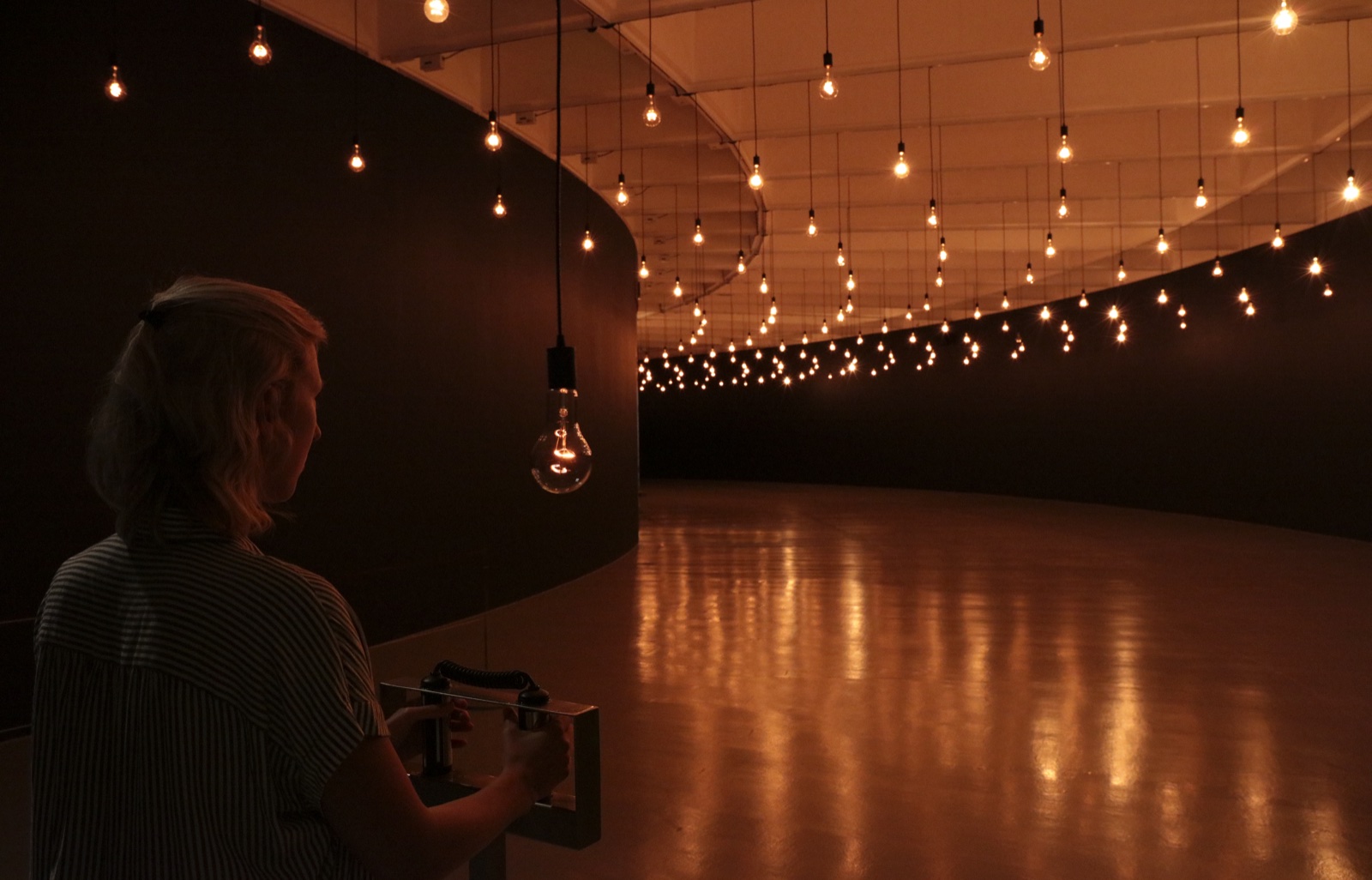 Pulse Room, Rafael Lozano-Hemmer. Photo by Cathy Carver, resized (CC BY-NC-SA 4.0).
The password for the Figma slides is pratt.
Assignment
Due: Nov 24, 2026
This week, continue Project 3: Shared Signal Party. You can work on your own or in a group of three. Each group or solo performance in the ARC can run for up to 7 minutes.
Start with one of your Week 11 experiments and develop one interaction for your performance. Choose a live input and decide what the audience will see or hear in response. Sketch what happens when the input starts, changes, and stops. Then try it in p5.js, Hydra, or another tool from class.
Think about these questions as you work on your sketch. If you’re working in a group, talk through them together.
- Who or what provides the input? How can someone tell what changed because of it?
- What happens if the response comes a little later, moves faster, or lasts longer? Does that change what someone does next?
- Where will people be in the ARC? What can they see or hear from there? What happens when several people encounter the work at the same time?
Submit a link to your sketch or a short recording, along with your sketch of the interaction. In a few sentences, tell me what you noticed as you worked on it and what you’ll try before the next rehearsal.
Tutorials & Resources
lerp()andmillis(), p5.js Reference- Creative Coding Math: Linear Interpolation (Lerp Function) - Patt Vira
- frameRate(), frameCount, millis() - Xin Xin
- Mouse & Key Inputs - Xin Xin
- Animating with Media Objects, p5.js
deltaTime, p5.js reference for timing motion between frames- Microphone Input, The Coding Train
- Sound Visualization: Frequency Analysis with FFT, The Coding Train
- Hand Pose Detection with ml5.js, The Coding Train
- Audio-Reactive Visuals, Hydra documentation