Random, Conditionals and Transformation
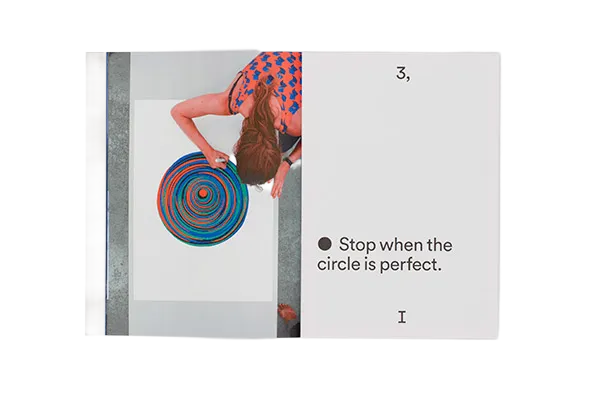
Conditional Design — Luna Maurer, Edo Paulus, Jonathan Puckey, and Roel Wouters
The password for these Figma files is pratt.
Coding Assignment 3
This assignment is part 3 of project Creative Cryptography.
Submit Assignment
Due: Sep 15, 2026
Continue developing the coding system you began last week. Add rules that translate qualities from your source material into visual, spatial, or material decisions. Your system should no longer vary in every possible direction; it should make choices within limits that you define. Use conditionals to decide when something changes, and transformations to build complex compositions from simple parts.
- Use at least two conditional structures with
if,else if, orelseto decide when and how something changes. - Use randomness intentionally. Decide which values may vary, what range they can occupy, and which relationships must remain stable.
- Use at least two transformations or grouping techniques, such as
push(),pop(),translate(), orrotate(). - Generate and save at least five distinct outcomes from the same system.
- Document the rules behind your system in plain language. Explain what each rule translates, what it reveals or hides, and how it keeps the outcomes related.
As you work, ask yourself: When does variation strengthen the meaning of your system, and when does it become arbitrary? Which constraints make the system more expressive? What must remain consistent for someone to recognize that the outcomes belong to the same language?
Bring your sketch, five printed outcomes, rule set, and process documentation to class next week. We will pin them up on the wall for discussion.
Begin thinking about which outcomes could become physical and how scale, material, or fabrication might change the way the encoded message is read.
Examples
Readings
Watch Zach Lieberman’s episode on Figma Source Material, we will discuss it next week.
Other optional readings for thinking about conditional design and transformation: